Wonach suchen Sie?

Exhaust resonator packing is used in absorptive resonators and straight-through silencers that contain a perforated core surrounded by fibrous acoustic material. It should not be assumed that every product called a resonator contains packing. Helmholtz and other reactive resonators can control specific frequencies through chamber geometry without using fiberglass, stainless wool or another fibrous filling.
For OEM exhaust development, the first step is therefore to identify the resonator construction. If the design uses a perforated straight-through core with an acoustic cavity around it, fiberglass, stainless steel wool, basalt fiber or another approved packing system can be specified according to temperature, gas velocity, cavity volume and required retention.
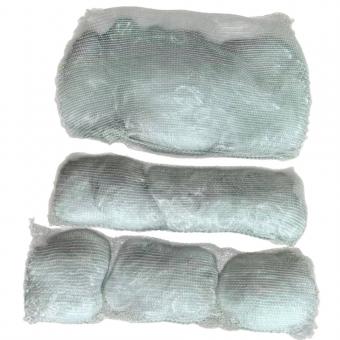
BSTFLEX supplies muffler and exhaust silencer packing materials for absorptive exhaust systems, including fiberglass packing, stainless steel wool, basalt fiber, ceramic fiber, retaining screens and preformed packing components.
Only if the resonator is designed as an absorptive or packed straight-through component.
A typical packed resonator may contain:
A Helmholtz resonator, quarter-wave resonator or other reactive chamber may use no fibrous packing at all.
Before ordering resonator packing material, check the internal drawing, cutaway, existing packing or original manufacturer specification.
| Design Type | How It Controls Sound | Does It Normally Require Fibrous Packing? |
|---|---|---|
| Absorptive straight-through resonator | Acoustic energy passes through a perforated core into surrounding porous material. | Yes, when packing is part of the approved design. |
| Glasspack-style resonator | Uses a perforated or louvered inner tube surrounded by sound-absorbing material. | Typically yes. |
| Helmholtz resonator | Targets frequency through tuned chamber volume and neck geometry. | Not necessarily; many designs use no fibrous packing. |
| Quarter-wave resonator | Uses a tuned tube length to cancel a target frequency. | Typically not dependent on fibrous packing. |
| Combination muffler/resonator | May combine reactive chambers with absorptive packing zones. | Only in the designated absorptive sections. |
This distinction is important for keyword targeting as well as engineering. A search for exhaust resonator packing is relevant to a packed resonator; it should not be used to imply that every tuned resonator contains wool.
In a straight-through absorptive design, exhaust gas travels through the central perforated tube. Acoustic pressure waves interact with the perforations and the surrounding porous packing material.
The acoustic filling converts part of the sound energy into small-scale motion and heat within the fiber structure. The gas flow itself should remain primarily inside the core.
The performance of a straight through muffler packing system depends on several interacting variables:
Packing material alone does not determine the finished resonator sound.
Fiberglass resonator packing is widely used in absorptive exhaust designs because fibrous glass can provide a porous acoustic structure while tolerating elevated exhaust temperatures when the correct grade is selected.
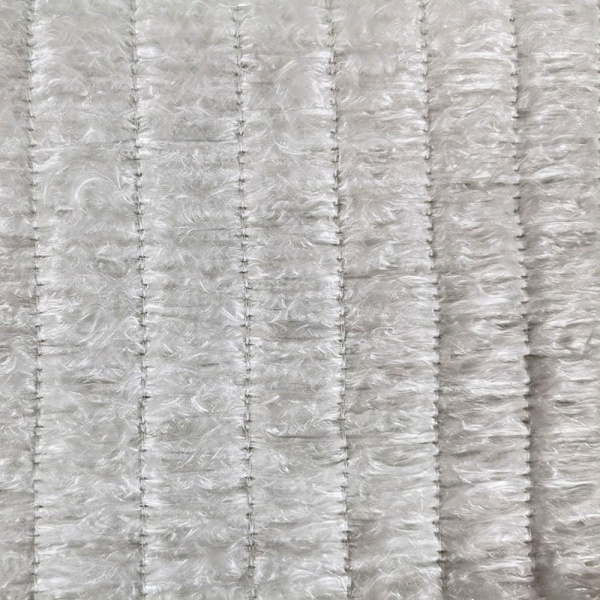
BSTFLEX fiberglass product directions include:
The correct product depends on the manufacturing process. One resonator factory may meter loose fiber around the core, while another wraps a mat or uses a pre-cut heat-released sheet.
A useful fiberglass RFQ should identify:
The word fiberglass alone is not enough to determine the finished packing system.
Stainless steel wool resonator packing can be used as a metallic packing material, but in many straight-through exhaust designs its more important role is as a protective layer between the perforated core and the softer outer acoustic fiber.
A typical layered construction may be:
Perforated core → stainless steel wool → fiberglass acoustic packing → outer shell.
The stainless steel wool can help protect surrounding fiberglass from direct high-velocity gas pulses through the core perforations.
BSTFLEX supplies:
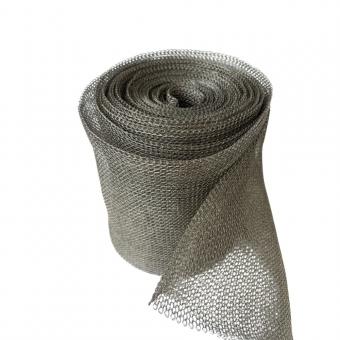
Metallic wool and a resonator packing screen should be treated as different components.
Stainless steel wool is a metallic-fiber structure.
A retaining screen is made from interlaced or otherwise formed wire and provides mechanical containment.
BSTFLEX supplies a Stainless Steel Exhaust Screen for Muffler Packing Retention for suitable designs.
A resonator may use wool, screen, both or neither depending on the approved construction.
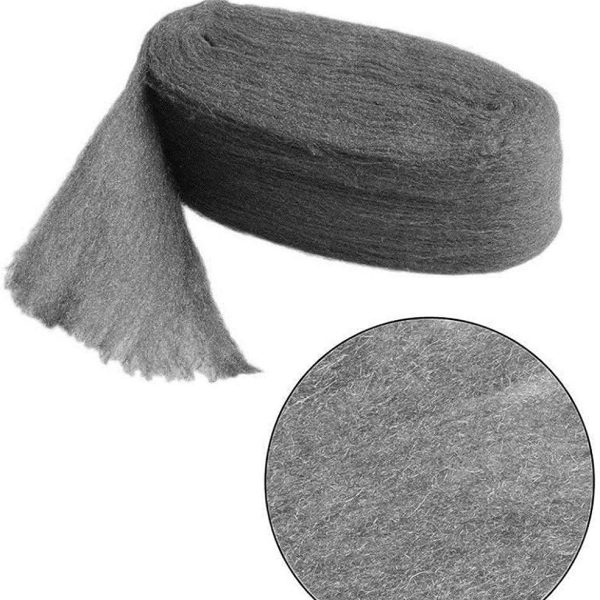
Perforated core packing is one of the most important concepts in straight-through resonator design because the packing is positioned around the perforated gas-flow tube rather than inside it.
The perforated core should remain open for exhaust flow.
For an OEM packing quotation, provide:
A different core diameter changes the available packing volume even when the outer resonator body remains unchanged.
For a simple round resonator with a centered circular core:
V = π × (D2 - d2) × L / 4,000,000
when all dimensions are entered in millimeters, where:
If stainless steel wool or a core sleeve surrounds the perforated tube, use the outside envelope of that installed layer where appropriate rather than the bare tube diameter.
For oval, race-track or irregular resonators, calculate the actual cross-sectional area from the drawing or CAD geometry.
When the resonator already has an approved installed packing density:
Dry fiber weight = net packing volume × approved installed density.
This equation converts an approved engineering value into a production quantity. It does not determine the correct density for a new resonator.
Do not copy a density from another muffler or glasspack simply because the core diameter appears similar.
A frequent question is whether resonator wool should be tightly packed.
The correct answer is to use the approved material quantity and installed density.
Packing that is too loose can create:
Excessive compression can change the open fiber structure used for acoustic absorption.
For OEM assembly, specify dry filling weight rather than instructing operators to pack the resonator “as tightly as possible.”

The market term glasspack packing usually refers to fibrous material surrounding the straight-through core of a glasspack-style muffler or resonator.
The actual material may vary by design.
When replacing or producing glasspack muffler packing, identify:
Do not assume that every straight-through resonator uses the same fiberglass material simply because the finished product is called a glasspack.
Compact bullet-style resonators can also use a perforated straight-through core with surrounding acoustic packing.
These designs often have limited radial packing depth, making the relationship between core diameter, shell diameter and material quantity especially important.
For a compact bullet resonator packing project, provide:
Performance exhaust systems may use packed resonators to control rasp, higher-frequency noise or overall sound level while retaining a relatively direct gas path.
The packing supplier should not claim that a material alone eliminates drone or tunes a specific frequency.
Those results depend on:
Material selection supports the resonator design; it does not replace acoustic system engineering.
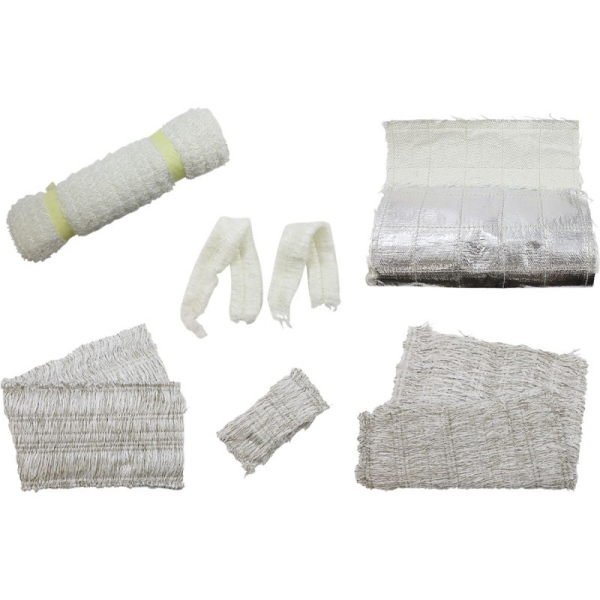
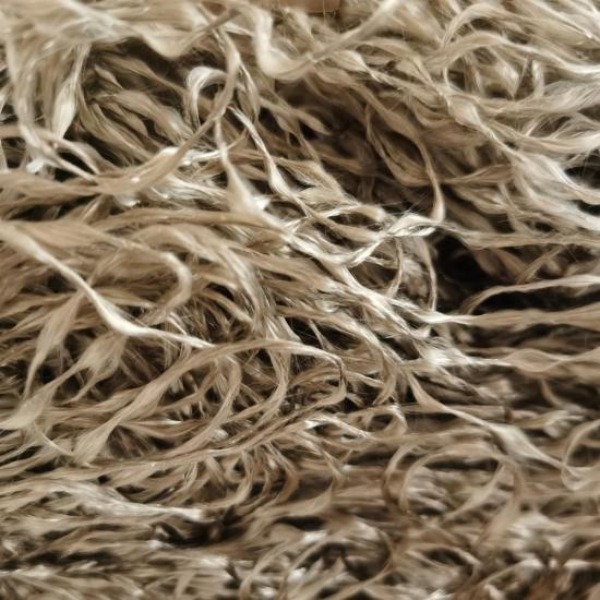
Basalt fiber can also be evaluated where the resonator specification requires that material family.
BSTFLEX supplies:
Do not substitute basalt for fiberglass solely because of a higher advertised temperature. Compare the actual fiber grades, packing quantity, assembly method and complete-resonator test results.
For severe thermal environments, ceramic fiber may be evaluated where the resonator design and handling requirements support its use.
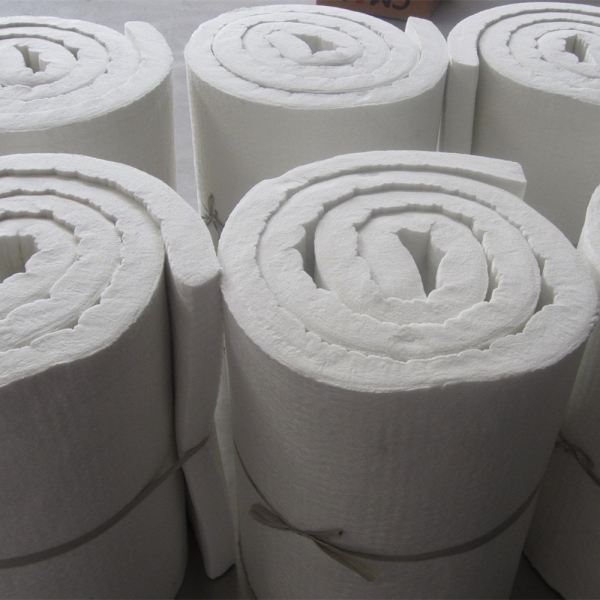
BSTFLEX supplies Ceramic Fiber Muffler Packing Mat.
A ceramic material should not be selected solely from a maximum-temperature number. Confirm the actual fiber grade, sheet construction, handling requirements, filling weight and service conditions.
| Packing Form | Production Method | Main Purchasing Controls |
|---|---|---|
| Loose fiber | Measured and distributed during assembly | Fiber grade, dry charge and filling method |
| Continuous yarn or fiber | Processed through a controlled filling or wrapping operation | Yarn construction, package form and material consumption |
| Mat or sheet | Cut and wrapped around the perforated core | Areal weight, thickness, dimensions and overlap |
| Expanding sheet | Installed compact and released during approved initial heating | Fiber weight, compressed dimensions, stitching and release conditions |
| Pre-weighed charge | One defined fiber quantity supplied for one resonator or packing zone | Net fiber mass, tolerance, label and packaging |
| Contained sock or component | Supplier controls the fiber charge and component geometry | Diameter, length, filling weight and cover construction |
Fiber visible at the exhaust outlet or a progressively louder straight-through resonator can indicate a packing-retention problem, but several causes should be considered.
Possible contributors include:
Inspect the location of material loss before changing fiber type.
When rebuilding an existing packed resonator, record the construction before removing the old material.
Useful information includes:
Used material weight should not automatically be treated as the original filling specification. Fiber loss, soot, oil and moisture can change its mass during service.
| Inspection Item | What to Verify |
|---|---|
| Material identity | Approved fiberglass, basalt, ceramic or metallic material reference |
| Fiber quantity | Dry charge, piece weight or areal weight according to specification |
| Dimensions | Width, length, thickness, diameter or other controlled geometry |
| Metallic protection | Correct stainless wool, core sleeve or retaining-screen construction |
| Condition | No unacceptable moisture, contamination or damage |
| Identification | Part number, drawing revision, lot and required traceability |
| Packaging | Correct quantity, labels and carton configuration |
| RFQ Field | Information to Provide |
|---|---|
| Resonator type | Absorptive straight-through, glasspack-style, combined design or other construction |
| Core geometry | Core OD, perforated length and perforation information where available |
| Body geometry | Shell ID or internal profile and effective packing length |
| Material | Existing approved fiber or proposed fiberglass, basalt, ceramic or steel wool |
| Filling quantity | Dry weight, areal weight or approved installed density |
| Metallic protection | Steel wool, core sleeve, retaining screen or other approved layer |
| Operating conditions | Continuous and peak temperature, gas-flow information and vibration duty |
| Supply form | Loose fiber, mat, roll, expanding sheet, pre-weighed charge or preformed component |
| Commercial requirement | Prototype quantity, production demand, packaging and private-label requirements |
For drawing- and sample-based projects, visit Muffler Packing Manufacturer for OEM Exhaust Silencers.
No. Packed absorptive resonators use fibrous acoustic material around a perforated core, while Helmholtz, quarter-wave and other reactive resonators can operate without fibrous packing.
There is no universal best material. Fiberglass is widely used, while stainless steel wool can provide a core-side protective layer. Basalt or ceramic fiber may be evaluated where the design and operating conditions require them.
It depends on the resonator design. In many layered constructions stainless steel wool protects a larger fiberglass or mineral-fiber acoustic layer rather than replacing it completely.
Glasspack packing is the fibrous sound-absorbing material surrounding the perforated or louvered straight-through tube in a glasspack-style exhaust component.
Use the approved dry fiber charge or installed density for the actual resonator. Core diameter, body diameter, packing length and material construction all affect the required quantity.
Only if its construction permits service or rebuilding. Welded or sealed resonators may require manufacturing-level disassembly rather than ordinary repacking.
BSTFLEX can review fiberglass, basalt, ceramic fiber, stainless steel wool, retaining screens, pre-weighed charges and custom packing components for suitable OEM resonator and silencer projects.
Send BSTFLEX the resonator drawing, core diameter, shell dimensions, packed length, material requirement, target filling weight and expected order quantity.
Where the existing packing specification is unknown, provide an unused reference sample where possible and photographs of the internal core, wool and retaining layers.
Other exhaust acoustic packing materials and components are available for straight-through mufflers, silencers and packed resonators.

No.10, Chuangxin North Road, Nanshan Park, Ningguo Economic and Technological Development Zone, Ningguo City, Anhui Province, China
Tel/Whatsapp : 0086-15856303740
Email : sales@bstbraidedsleeve.com
Skype : vanesa-cheng