Wonach suchen Sie?
Ein heißes Auspuffrohr kann ein viel größeres thermisches Problem verursachen, als sein Durchmesser vermuten lässt.
In Fahrzeugen, Generatorgehäusen, Schiffsmaschinenräumen oder Industriemaschinen verlaufen Abgasleitungen oft nur wenige Zentimeter von elektrischen Leitungen, Hydraulikschläuchen, Kraftstoffleitungen, Karosserieteilen, Sensoren oder Wartungsbereichen entfernt. Sobald das Abgassystem Betriebstemperatur erreicht hat, kann dieser geringe Abstand zum kritischen Punkt der gesamten thermischen Auslegung werden.
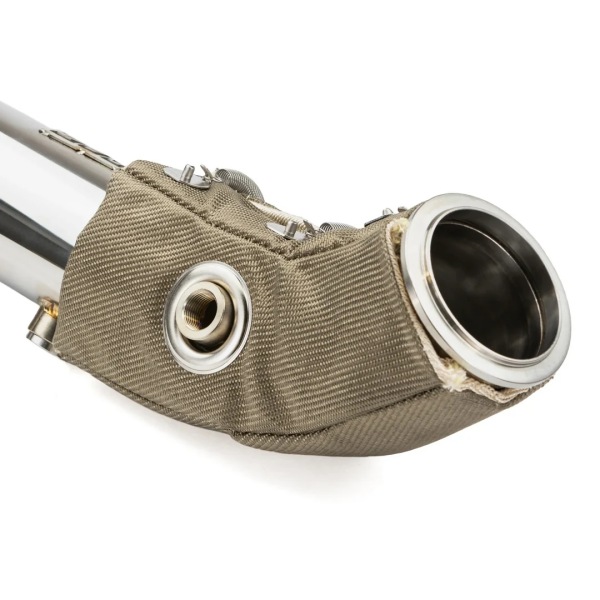
Hier ist der OrtAuspuffrohrisolierungwird notwendig.
Ein geeignetes Isoliersystem leistet mehr, als nur ein heißes Rohr abzudecken. Es muss die Wärme kontrollieren und gleichzeitig Vibrationen, wiederholten Temperaturwechseln, Verschmutzungen, Bewegungen und Wartungsarbeiten standhalten.
Aus diesem Grund ist die Auswahl der Isolierung allein anhand der Temperaturkennwerte selten ausreichend.
BSTFLEX entwickeltAbgas-Hitzeschutzisolierungfür Abgasanlagen von Kraftfahrzeugen, Dieselmotoren, Schiffen, Generatoren und Industrieanlagen, einschließlich abnehmbarer Rohrisolierungen, Ummantelungen, Hitzeschutzbänder, flexibler Schläuche und thermischer Metallbarrieren.
Bevor Sie sich für ein Dämmmaterial entscheiden, ermitteln Sie, welches Problem gelöst werden soll.
Ein Auspuffrohr muss möglicherweise isoliert werden, weil:
Ein nahegelegener Kabelbaum überhitzt;
Die Temperatur im Gehäuse ist zu hoch;
Die Bediener sind heißen Oberflächen ausgesetzt;
Hitze erreicht eine Kraftstoff- oder Hydraulikleitung;
Der Fahrzeugboden ist übermäßiger Strahlungswärme ausgesetzt;
Der Maschinenraum ist unzureichend belüftet;
Das Abgasrohr muss stromabwärts mehr Wärme speichern;
Die umliegenden Geräte vertragen die aktuelle Temperatur nicht.
Das sind unterschiedliche Probleme.
Möglicherweise benötigen sie unterschiedliche Isoliersysteme, selbst wenn die Abgasrohrtemperatur identisch ist.
Zum Beispiel kann der Schutz des Fahrzeugbodens vor Strahlungswärme durch eine reflektierende Abschirmung begünstigt werden, während zur Reduzierung der Außentemperatur eines Generatorauspuffrohrs eine dicke, abnehmbare Isolierdecke erforderlich sein kann.
Die Isolierung von Abgasrohren lässt sich im Allgemeinen in vier praktische Kategorien einteilen.
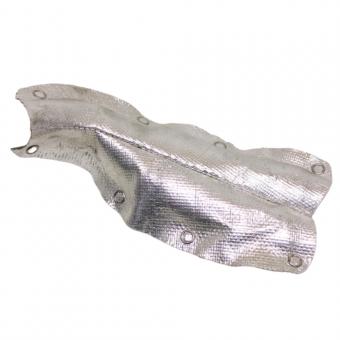
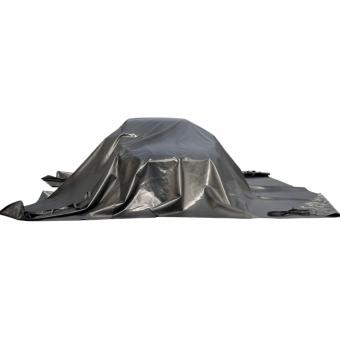
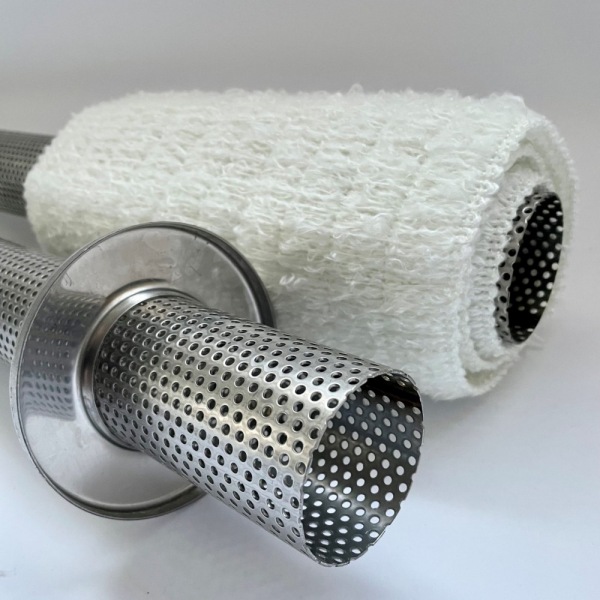
Eine abnehmbare Isolierdecke wird so gefertigt, dass sie zu einem bestimmten Rohrdurchmesser oder einer bestimmten Abgasgeometrie passt.
Es enthält normalerweise:
eine innere hitzebeständige Schicht;
Wärmedämmung;
eine äußere Schutzschicht;
mechanische Befestigung.
Diese Bauweise eignet sich besonders dann, wenn es auf Wartungszugang ankommt.
Typische Installationen umfassen:
Dieselgeneratoren;
Schiffsmotoren;
Industriemotoren;
große Auspuffrohre;
Schalldämpfer;
Abgaskrümmer.
Die Decke kann aus mehreren Abschnitten anstatt aus einem langen Stück gefertigt werden, sodass die Techniker nur den für die Inspektion benötigten Abschnitt entnehmen können.
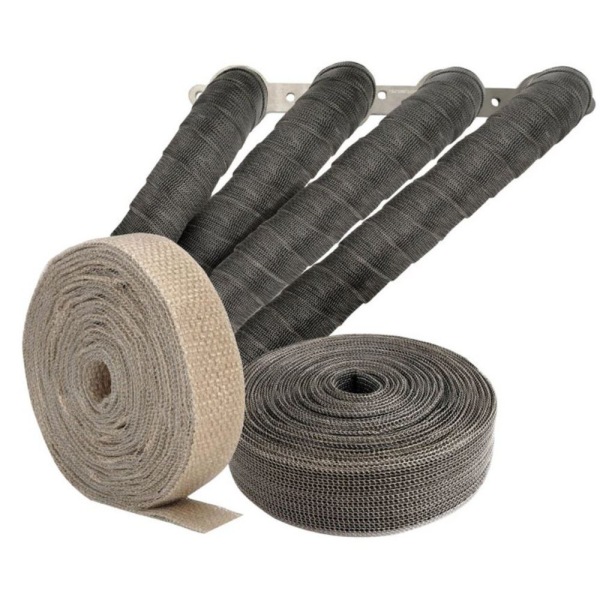
Auspuffband wird in Rollen geliefert und spiralförmig um das Rohr gewickelt.
Es wird häufig verwendet für:
Automobilkrümmer;
Motorräder;
Hochleistungsabgasanlagen;
Abgasrohre mit kleinem Durchmesser;
Maßgefertigte Auspuffanlagen.
BSTFLEX-LieferungenHitzeschutzband für Auspuff und Krümmerin verschiedenen Hochtemperatur-Faserkonstruktionen.
Isolierband bietet eine einfache Möglichkeit, lange Rohroberflächen zu isolieren, ist aber weniger praktisch, wenn die Abgasanlage regelmäßig zur Wartung geöffnet werden muss.
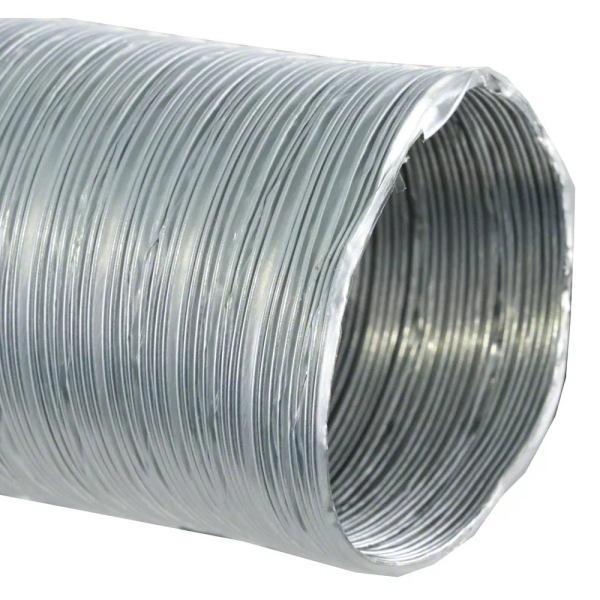
Manche Abgasleitungen erfordern eine Schlauchlösung anstelle einer vorgefertigten Isolierdecke.
Flexible Isolierungen können über kleineren Abgasrohren angebracht werden, wenn Durchmesser und Geometrie relativ einfach sind.
Zum Beispiel der BSTFLEXAbgasisolierung für Dieselheizungenist für kompakte Abgasrohrleitungen konzipiert, wie sie beispielsweise in Dieselheizungsanlagen verwendet werden.
Hülsen- und Isolierungslösungen können besonders nützlich sein, wenn:
Der Installationsraum ist begrenzt;
Das Rohr ist relativ klein;
Eine lückenlose Netzabdeckung ist erforderlich;
Ein starrer Schild wäre schwer zu installieren.
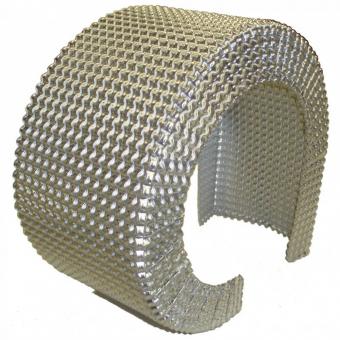
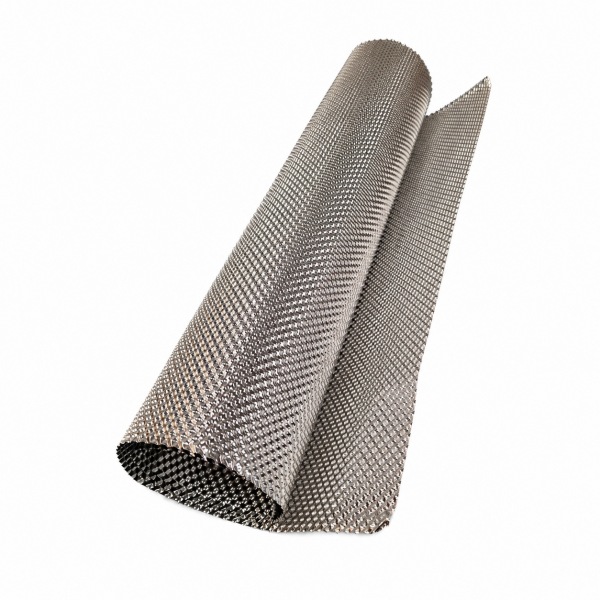
Eine Metallabdeckung muss das Rohr nicht unbedingt berühren.
Stattdessen wird es üblicherweise mit einem kontrollierten Abstand zwischen der Abschirmung und der Wärmequelle installiert.
Diese Anordnung ist besonders effektiv, um die Abstrahlung von Wärme in Richtung nahegelegener Bauteile zu reduzieren.
Gängige Materialien sind:
Aluminium;
Edelstahl;
geprägter Edelstahl;
Nickellegierungen.
Ein Hitzeschild aus Metall kann in folgenden Fällen vorzuziehen sein:
Die Einbaudicke muss gering bleiben;
Die mechanische Stoßfestigkeit ist wichtig;
Der Schild muss eine bestimmte Form behalten;
Die Strahlungswärme ist das Hauptproblem.
Für anspruchsvolle Umgebungen stellt BSTFLEX auch Folgendes her:Hitzeschild aus Inconel-Legierung 625Komponenten.
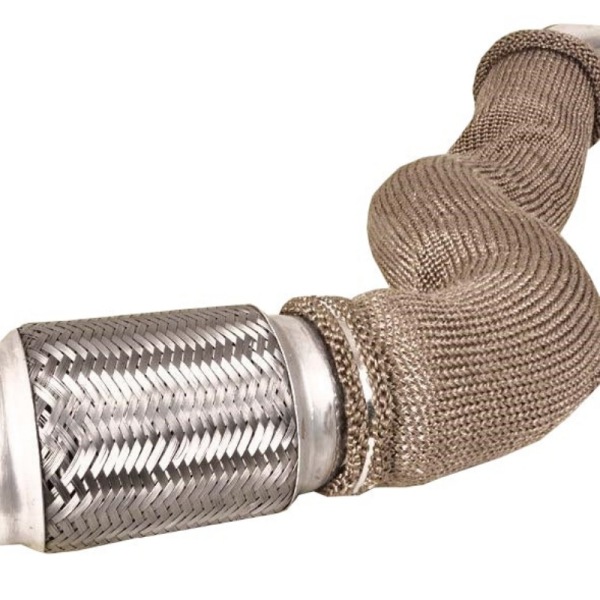
Diese Begriffe werden oft synonym verwendet, ihre technische Funktion kann jedoch unterschiedlich sein.
AuspuffrohrisolierungNormalerweise umgibt es das Rohr und begrenzt den Wärmeaustausch durch eine Isolierschicht.
EinHitzeschutzblech für AuspuffrohrNormalerweise befindet es sich zwischen dem Rohr und dem zu schützenden Bauteil.
Eines davon enthält Wärme.
Der andere blockiert oder leitet es um.
In manchen Abgasanlagen werden beide verwendet.
Bei einem Dieselmotor kann eine abnehmbare Isolierdecke um das Auspuffrohr vorhanden sein, während eine Edelstahlabdeckung ein nahegelegenes elektrisches Gehäuse schützt.
That combination can provide better thermal control than either solution alone.
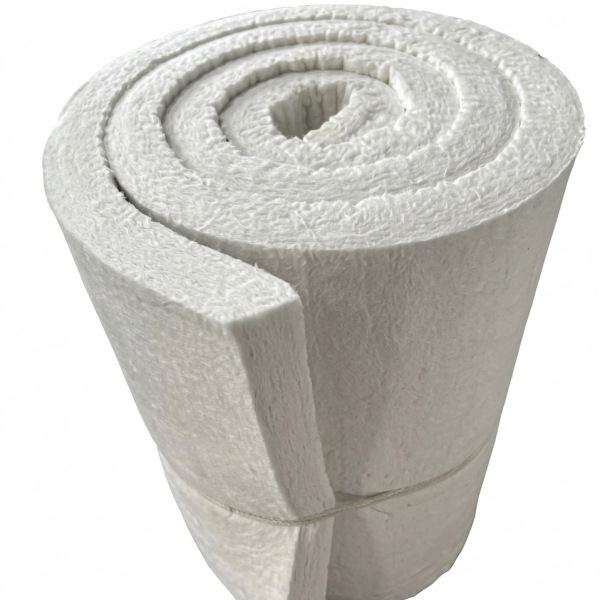
Material selection should begin with continuous operating conditions.
Fiberglass is one of the most widely used materials for exhaust insulation.
Advantages include:
flexibility;
good thermal resistance;
availability in many constructions;
practical manufacturing cost.
Fiberglass can be used in:
blankets;
tapes;
wraps;
sleeves;
composite heat shields.
It is often suitable for moderate and high-temperature exhaust applications where extreme temperature exposure is not continuous.
High silica material is selected when higher heat resistance is required.
It may be used as:
outer fabric;
inner hot-side layer;
insulation textile;
heat-resistant wrap.
Silica constructions are useful around:
turbocharged exhaust systems;
manifolds;
high-output diesel engines;
industrial exhaust equipment.
Basalt-based materials are frequently used in automotive and performance exhaust insulation.
They offer:
flexible installation;
strong heat resistance;
good compatibility with wrapped exhaust tubes.
Basalt is often seen in heat wrap and shaped blanket applications.
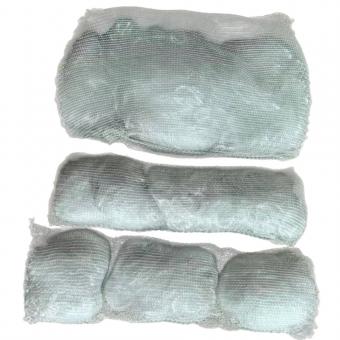
Where a greater temperature reduction is required within limited space, high-temperature insulation cores may be used.
These materials are normally enclosed within:
fiberglass fabric;
silica fabric;
stainless steel foil;
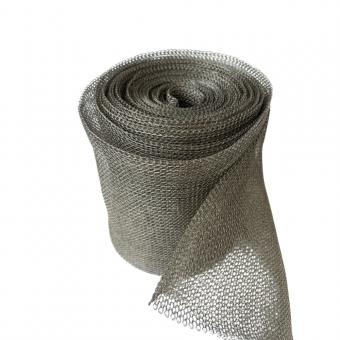
stainless steel mesh.
The insulation core should not be evaluated separately from the blanket construction.
Aluminum is primarily used as a reflective surface rather than a thick insulation medium.
Its low weight makes it particularly suitable for:
automotive underbody protection;
exhaust pipe heat shields;
muffler shields;
vehicle floor insulation.
Stainless steel is preferred where the exhaust heat shield also requires mechanical strength.
It performs well in applications exposed to:
vibration;
road debris;
repeated thermal cycling;
higher temperatures.
Nickel alloys such as Alloy 625 are reserved for demanding environments where temperature, oxidation and corrosion requirements exceed the limits of conventional sheet metals.
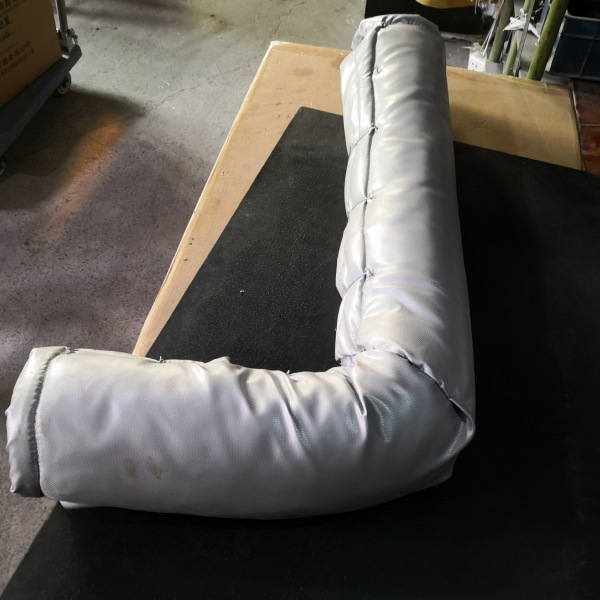
A thicker insulation layer generally reduces heat transfer more effectively, but this does not mean the thickest available blanket is automatically the best design.
Increasing thickness can create problems with:
component clearance;
mounting brackets;
adjacent pipe routing;
sensor access;
engine compartment packaging.
In tightly packaged automotive systems, only a few millimeters of space may be available.
In a large generator enclosure, considerably thicker insulation may be practical.
The correct insulation thickness should therefore balance thermal performance with installation geometry.
Diesel exhaust pipes frequently operate for long periods under load.
Heat containment becomes especially important in:
trucks;
construction equipment;
agricultural machinery;
industrial engines;
stationary power systems.
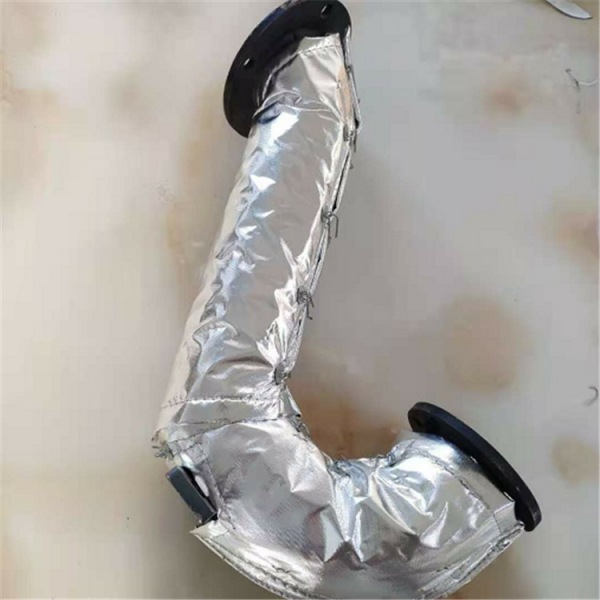
A removablediesel exhaust pipe insulationsystem can reduce heat released into the surrounding engine compartment while still allowing service access.
Generator exhaust piping often runs through compact acoustic enclosures.
This creates a concentrated heat source close to:
electrical cabinets;
acoustic materials;
engine components;
service areas.
A generator exhaust insulation system commonly uses removable sections around pipes, elbows and silencers.
This also allows the insulation to be removed during maintenance without replacing the entire system.
Marine exhaust systems present additional concerns including:
limited ventilation;
moisture;
salt exposure;
vibration;
restricted service space.
For dry marine exhaust systems, segmented blankets are often preferred because they allow easy access to flanges and exhaust connections.
Passenger and performance vehicles use exhaust insulation for:
headers;
downpipes;
catalytic converters;
center exhaust pipes;
mufflers.
Depending on available space, solutions may include:
wrap;
shaped blanket;
metal shield;
reflective barrier.
Industrial engines and machinery may use large-diameter exhaust lines that require customized blanket sections.
These applications often place greater importance on:
durability;
repeatable installation;
service access;
identification of individual insulation sections.
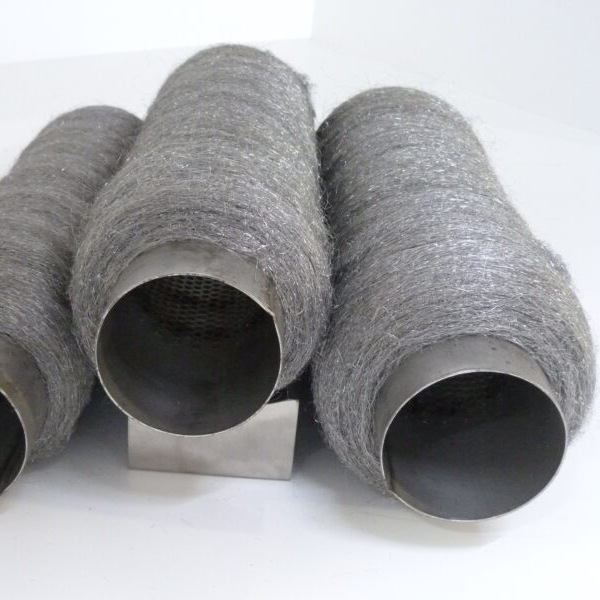
A bend is often more difficult to insulate than a straight pipe.
Wrap can follow gradual bends, but large industrial elbows may benefit from a fitted insulation blanket.
The BSTFLEXThermal Insulation Elbow Blanketis designed for curved exhaust geometry where a standard flat insulation section cannot maintain consistent coverage.
A well-designed elbow blanket should consider:
bend radius;
flange position;
pipe diameter;
seam location;
fastener access.
One of the most common weaknesses in an exhaust insulation system is the flange area.
A thick blanket may work well on the pipe but leave a large exposed metal flange.
That exposed section can become a strong local heat source.
For higher-performance systems, insulation should therefore be designed around:
flange diameter;
bolt access;
connection points;
sensors;
expansion joints.
A removable flap or separate flange blanket may be used where regular access is required.
For serious OEM projects, saying “we need exhaust insulation” is not enough.
A better specification is:
exhaust pipe operating temperature;
ambient temperature;
pipe diameter;
required outer surface temperature;
insulation thickness limit;
airflow condition.
This allows the insulation design to be evaluated against a measurable target.
Without these conditions, it is difficult to compare two insulation systems accurately.
Maintenance requirements are particularly important for:
marine engines;
generators;
mining equipment;
construction machinery;
industrial engines.
If technicians need frequent access to exhaust joints or engine components, permanent wrap can create additional maintenance work.
A removable blanket is usually more practical in these situations.
A segmented system may be designed so that:
each section has an identification mark;
only the required section is removed;
the blanket can be reinstalled after inspection.
This reduces disruption during service.
A high published temperature rating does not guarantee that the complete insulation system will perform correctly.
The full assembly must be considered.
An insulation material that performs well in a laboratory may fail quickly if it rubs continuously against a bracket or neighboring component.
Insulation should not prevent access to:
sensors;
clamps;
inspection ports;
flange bolts.
An exhaust system may need different thermal solutions in different areas.
For example:
manifold: shaped blanket;
straight pipe: wrap;
elbow: removable blanket;
muffler: metal shield.
The outer layer must suit the operating environment, not just the temperature.
Instead of selecting exhaust insulation by material name, use the following sequence.
For a simple tubular pipe:
Consider exhaust wrap or sleeve insulation.
For a pipe that requires regular inspection:
Use a removable pipe insulation blanket.
For an irregular elbow or flange:
Use a custom shaped blanket.
For protecting a nearby panel from radiant heat:
Use a metal or reflective heat shield.
For extreme heat and demanding environments:
Evaluate high-silica, high-temperature fiber, stainless steel or nickel-alloy constructions.
This approach is more reliable than choosing one product type for the complete exhaust system.
For accurate design and quotation, provide:
Pipe dimensions
outside diameter;
overall insulated length;
bend radius;
flange dimensions.
Temperature
normal operating temperature;
maximum temperature.
Installation environment
automotive;
marine;
generator;
industrial;
outdoor;
enclosed.
Service requirement
removable;
permanent;
frequency of maintenance.
Performance requirement
target external temperature;
maximum insulation thickness.
Project information
sample or drawing;
prototype quantity;
expected production volume.
The more complete the input data, the easier it is to design an insulation system that fits correctly from the first prototype.
Exhaust pipe insulation is worth considering whenever an exhaust line creates unacceptable heat exposure for the surrounding system.
The decision should be driven by actual conditions rather than by appearance.
If the objective is to lower heat around the pipe, protect surrounding components or create a safer service environment, an insulation blanket, wrap, sleeve or heat shield may be appropriate.
For applications involving multiple exhaust components, the best result often comes from combining several insulation methods.
BSTFLEX manufacturesexhaust heat shield insulation, removable blankets, exhaust wraps, lagging and custom metal heat shields for automotive, marine, diesel, generator and industrial exhaust systems.
Für eine maßgefertigte Abgasrohrisolierung benötigen wir die Rohrabmessungen, die Betriebstemperatur, die Einbauumgebung und die benötigte Menge. So kann eine passende Isolierung speziell für das jeweilige Abgassystem ausgewählt werden, anstatt sich auf eine allgemeine Temperaturangabe zu verlassen.

No.10, Chuangxin North Road, Nanshan Park, Ningguo Economic and Technological Development Zone, Ningguo City, Anhui Province, China
Tel/Whatsapp : 0086-15856303740
Email : sales@bstbraidedsleeve.com
Skype : vanesa-cheng