Wonach suchen Sie?
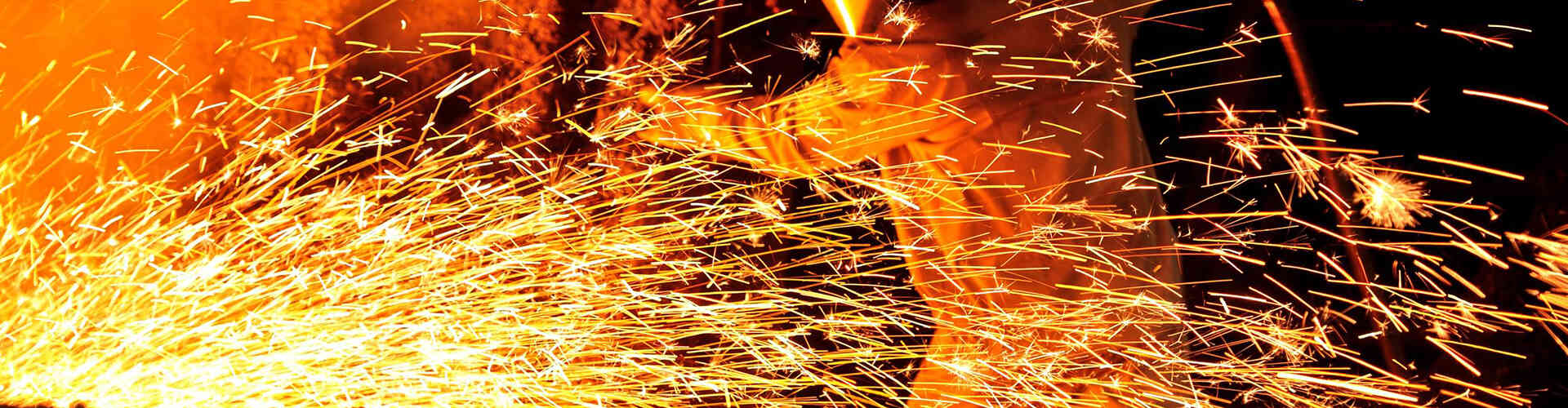
The construction typically combines a fiberglass textile base with a reflective aluminum outer surface. The fiberglass layer provides flexibility and structural support, while the aluminized surface helps reduce radiant heat transfer toward the protected wiring.
For automotive applications, selecting the correct sleeve requires more than choosing a temperature rating. Engineers also need to consider heat-source temperature, clearance, harness diameter, connector size, installation sequence, sleeve flexibility, abrasion exposure and the required temperature of the protected wiring assembly.
BSTFLEX manufactures aluminized heat protective sleeves for automotive wire harnesses, cables, hoses and fluid lines in standard and custom constructions.
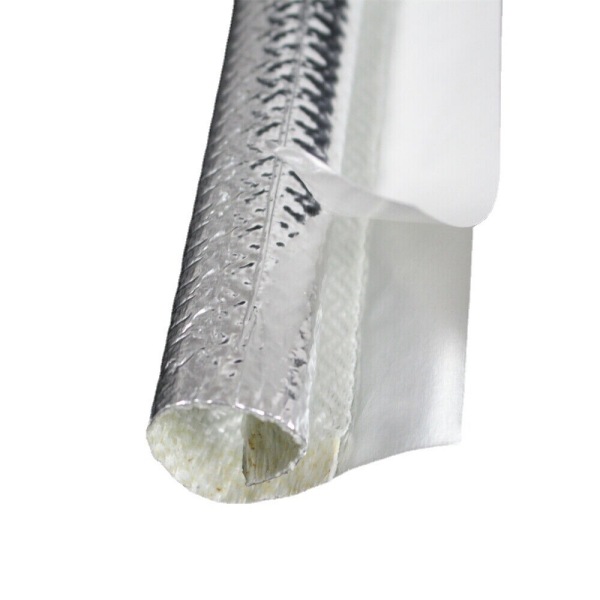
An aluminized fiberglass sleeve is a flexible thermal protection sleeve made by combining fiberglass textile with an aluminum-based reflective outer layer.
The sleeve is designed primarily to reduce heat exposure caused by radiant energy. A hot exhaust component can transfer significant heat to nearby wiring even when the harness does not touch the hot surface. The reflective exterior helps limit the amount of radiant energy absorbed by the sleeve, while the fiberglass layer provides additional thermal separation and mechanical support.
Depending on the required construction, the reflective surface may use:
The fiberglass base may be braided, woven, sewn or incorporated into a multi-layer composite sleeve.
Fiberglass is commonly used in automotive thermal protection because it can provide a flexible textile structure while tolerating temperatures that would damage many conventional polymer materials.
In an aluminized sleeve, the fiberglass layer serves several functions:
The fiberglass construction should not be evaluated separately from the aluminum layer. The performance of the finished sleeve depends on the complete system, including reflective surface, fiberglass structure, adhesive or bonding method, seam construction and installation.
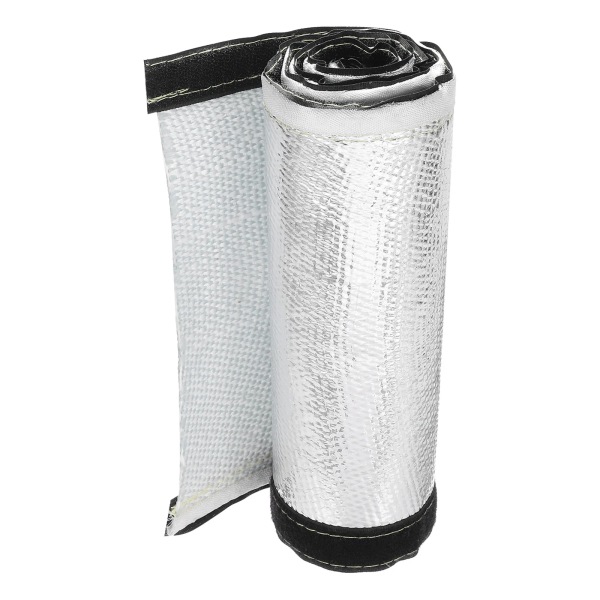
An aluminum outer surface is used because a clean reflective metallic surface can reduce absorption of radiant heat.
This is particularly useful when the wire harness is positioned near:
Radiant heat protection is different from direct-contact insulation. If the sleeve is pressed against a hot exhaust component, conductive heat becomes more important. In that condition, a reflective surface alone may not provide sufficient protection.
Automotive wiring is especially sensitive to localized thermal exposure because the harness contains multiple materials with different temperature limits.
A typical harness may include:
The maximum allowable temperature of the complete harness may therefore be controlled by one of these components rather than by the electrical conductor itself.
An aluminized wire harness sleeve is used to reduce the thermal load reaching these materials while still allowing the harness to remain flexible and follow the required vehicle routing.
Aluminized fiberglass sleeves can be used in many vehicle thermal-management locations.
Typical applications include:
The same reflective sleeve technology can also be used around hoses and fluid lines where radiant heat is the primary thermal problem.
An aluminum foil fiberglass sleeve generally uses a fiberglass substrate combined with a foil-based reflective surface.
This construction provides a bright metallic exterior while retaining the flexibility of a textile sleeve underneath.
The finished product may use:
The correct design depends on the required diameter, flexibility, production method and end-use environment.
Not every reflective sleeve uses exactly the same metallic layer.
An aluminum foil construction uses a thin metallic foil bonded or laminated to the supporting textile. An aluminized film uses a reflective aluminum-coated film as part of the outer structure.
When comparing these constructions, buyers should consider:
The selected material should be matched to the actual operating environment rather than chosen only from the appearance of the reflective surface.
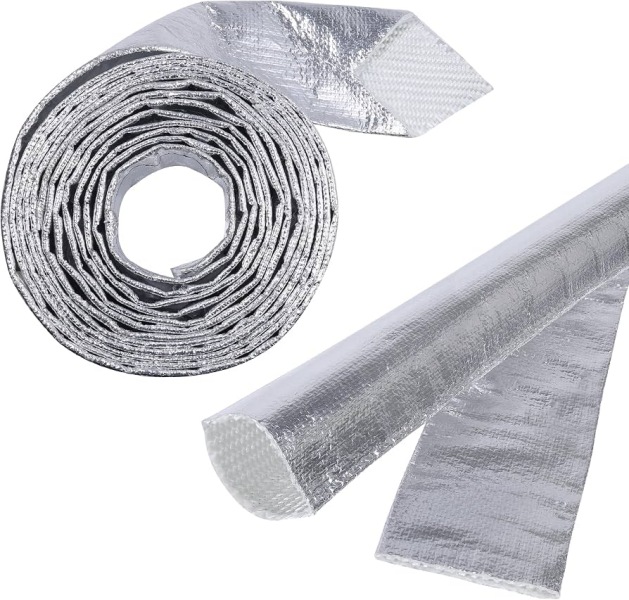
Space is often limited in modern engine compartments. A bulky thermal barrier can interfere with brackets, connectors, adjacent hoses or moving components.
For these applications, a relatively low-profile reflective sleeve may be preferred.
A low-profile sleeve can be particularly useful where:
However, reducing sleeve thickness can also reduce insulation capacity. The design therefore needs to balance package space with the required thermal reduction.
Different manufacturing methods can create different sleeve profiles.
A tubular sleeve provides circumferential coverage without a longitudinal opening. It is usually installed before large connectors are fitted.
A sewn sleeve can be manufactured from aluminized fabric formed into a tube. This approach provides flexibility in diameter, layer combination and custom geometry.
A reflective layer may also be applied around a fiberglass tubular base. This can provide flexibility and allow different reflective materials to be combined with the supporting sleeve.
For completed wire harnesses, the sleeve can use hook-and-loop fasteners, snaps or another openable structure so the harness does not need to pass through the sleeve.
For a detailed comparison, see Slide-On vs Wrap-Around Heat Protection Sleeves for Automotive Wire Harnesses.
Sleeve diameter has a direct effect on installation and finished fit.
The sleeve should be large enough to fit over the protected harness without excessive compression, but not so oversized that it moves away from the intended location.
When selecting diameter, provide:
For a slide-on sleeve, connector size is especially important because the connector may be much larger than the cable bundle.
A common sizing problem occurs when a wire harness has a relatively small bundle diameter but much larger connectors.
For example, a harness body may fit a compact sleeve, but the end connector may be too large to pass through it.
There are several possible solutions:
The correct solution depends on the assembly sequence and the required finished fit.
There is no universal clearance value that applies to every exhaust and harness combination.
Thermal performance depends on:
In general, the available air space between a reflective sleeve and the hot component should be treated as part of the thermal design.
If the installation forces the sleeve into direct contact with the heat source, additional thermal insulation or a different shield arrangement may be necessary.
A heat source may operate at several hundred degrees while the protected wire harness must remain below a much lower temperature.
This is why a specification should ideally define both:
The difference between these values represents the thermal-management challenge the protective sleeve must address.
A sleeve material rating alone does not establish the resulting temperature of the harness.
Automotive harnesses rarely run in perfectly straight lines. The sleeve must often follow bends around engine components, transmission housings and mounting brackets.
When evaluating flexibility, consider:
The sleeve should maintain useful coverage around the bend without exposing large sections of the underlying fiberglass or harness.
Thermal protection is not the only requirement in an automotive installation.
The harness and sleeve may move against:
Repeated movement can damage poorly finished textile edges or reflective layers.
For applications with mechanical movement, buyers should evaluate:
Wire harness sleeves installed around engines and transmissions may encounter oil, water, coolant, road splash or other automotive fluids.
The suitability of the finished sleeve depends not only on fiberglass and aluminum but also on:
For OEM projects, required fluid resistance should be included in the specification instead of assuming every aluminized sleeve has the same resistance.
Transmission wiring is a particularly suitable application for reflective fiberglass sleeving because the harness may be routed near exhaust piping or other localized heat sources.
In addition to thermal performance, a transmission harness sleeve may require:
For more detailed design guidance, see Transmission Wire Harness Heat Protection Sleeve: Design and Thermal Requirements.
Sensor cables can be particularly difficult to protect because the wiring often needs to reach components installed directly in or near the exhaust system.
Common examples include:
An aluminized fiberglass sleeve can protect the cable section while allowing sufficient flexibility for routing around the connector and mounting point.
For these assemblies, connector dimensions and protected cable length should be included in the RFQ.
The correct fit is generally neither excessively tight nor excessively loose.
A sleeve that is too tight may:
A sleeve that is too loose may:
For OEM production, sleeve diameter and tolerance should be matched to the actual harness dimensional range.
Cut length is especially important where the sleeve protects only a defined portion of the wire harness.
If the sleeve is too short, part of the heat-exposed section may remain uncovered. If it is too long, it may overlap connectors, clips or other mounting features.
Production drawings should identify:
Cut fiberglass-based sleeves may require end treatment depending on the construction and assembly process.
Possible finishing methods include:
The correct method depends on the sleeve structure, required flexibility and production environment.
These two constructions solve different thermal problems.
An aluminized fiberglass sleeve is especially useful where radiant heat reflection is important.
A silicone-coated fiberglass sleeve is typically selected where the textile needs an elastomeric coating and the application emphasizes environmental resistance, direct exposure or another set of mechanical requirements.
The choice should therefore be based on the actual heat-transfer mechanism and operating environment rather than treating the two materials as interchangeable.
Silica fiber is used when a higher-temperature textile base is required.
An aluminized fiberglass sleeve may be more suitable for many automotive radiant heat applications where flexibility, low profile and reflective protection are priorities.
A silica construction may be considered when the thermal environment exceeds the practical range of conventional fiberglass-based designs.
The complete sleeve structure and required test conditions should determine the final selection.
A conventional tubular sleeve works best around a relatively consistent harness or cable bundle.
If the assembly includes:
a shaped textile shield may provide a better fit.
BSTFLEX also manufactures Custom-Shaped Aluminized Fiberglass Automotive Heat Shields for component geometries that cannot be effectively covered by a conventional straight sleeve.
Automotive wire harness protection frequently requires customer-specific dimensions and manufacturing details.
BSTFLEX can develop sleeves from:
Custom options can include:
| RFQ Information | Why It Matters |
|---|---|
| Harness outside diameter | Determines sleeve size |
| Protected length | Defines finished component length |
| Connector dimensions | Determines whether slide-on installation is possible |
| Heat-source type | Identifies the thermal environment |
| Heat-source temperature | Defines thermal severity |
| Minimum clearance | Important for radiant heat performance |
| Maximum harness temperature | Defines the required temperature reduction |
| Installation method | Determines tubular or removable construction |
| Mechanical requirements | Defines abrasion, flexibility and retention needs |
| Fluid exposure | Helps select the complete material system |
| Annual quantity | Influences manufacturing method and tooling |
| Required testing | Defines validation requirements |
A practical selection process starts with five questions:
Once these conditions are known, sleeve material, diameter, wall construction, closure method and length can be selected more accurately.
BSTFLEX manufactures reflective thermal protection products for automotive wire harnesses, cables, hoses and fluid lines. Available constructions include tubular aluminized fiberglass sleeves, sewn reflective sleeves, wrap-around sleeves, hook-and-loop designs, snap-closure sleeves, self-closing sleeves and custom-shaped heat shields.
For the complete reflective sleeve range, visit the Aluminized Heat Protective Sleeve category.
For broader material and design selection, see Automotive Wire Harness Heat Protection Sleeves: Materials, Designs and Applications.
For a custom project, send the harness diameter, protected length, connector dimensions, heat-source temperature, clearance, required harness temperature, annual volume and applicable customer specifications. BSTFLEX can evaluate the application and recommend a suitable sleeve construction for prototype and production supply.
An aluminized fiberglass sleeve is a flexible thermal protection sleeve that combines a fiberglass textile base with a reflective aluminum outer surface. It is commonly used to reduce radiant heat exposure around automotive wiring, cables and hoses.
Yes. It is commonly used where wire harnesses are routed near exhaust manifolds, turbochargers, catalytic converters, transmissions or other sources of radiant heat.
Both terms can describe reflective fiberglass-based thermal protection, but the outer reflective layer may use different constructions such as aluminum foil, aluminized film or aluminized fabric. The complete material specification should be reviewed rather than relying only on the product name.
A reflective aluminized sleeve is primarily useful for radiant heat protection. If the sleeve directly contacts a very hot surface, conductive heat becomes more important and additional insulation or a different protective arrangement may be required.
Measure the normal and maximum wire harness outside diameter and consider connector size, branch points and installation method. The sleeve should fit without excessive compression while remaining controlled around the protected section.
Yes, if a wrap-around, hook-and-loop, snap-closure or self-closing construction is used. A conventional tubular sleeve normally needs to be installed before large connectors are fitted.
Yes. BSTFLEX can manufacture cut-to-length sleeves and custom components according to drawings, dimensions or samples.
Yes. Multi-layer designs can combine a reflective outer surface with additional textile or insulation layers where greater thermal separation is required.
Send the harness diameter, protected length, connector dimensions, heat-source temperature, minimum clearance, maximum allowed harness temperature, installation method, required test specifications and estimated annual quantity.

No.10, Chuangxin North Road, Nanshan Park, Ningguo Economic and Technological Development Zone, Ningguo City, Anhui Province, China
Tel/Whatsapp : 0086-15856303740
Email : sales@bstbraidedsleeve.com
Skype : vanesa-cheng