Wonach suchen Sie?
Bei einem Absorptionsschalldämpfer ist der perforierte Kern nur ein Teil des akustischen Systems. Das Material, das diesen Kern umgibt, hat einen direkten Einfluss auf das Abgasgeräusch, die Klangqualität, die thermische Stabilität, die Lebensdauer der Dämmwolle und den Langzeitzustand des Schalldämpfers.
Dieser Stoff ist allgemein bekannt alsSchalldämpferfüllungDie
Je nach Abgasanlagenkonstruktion und Markt kann dasselbe Bauteil auch wie folgt bezeichnet werden:Schalldämpfer-Dichtungsmaterial,Auspuffdämpfer-Dämmung, Schalldämpferpackung, Auspuffdichtungsmaterial, Akustikfüllung, Schalldämpferwolle oder Auspuffdämpfungsmaterial.
BSTFLEX liefert und entwickelt Hochtemperatur-Dichtungsmaterialien für Motorradschalldämpfer, Autoabgasanlagen, Rennschalldämpfer, Industrieschalldämpfer, Generatoren und andere Abgasanlagen.
Entdecken Sie das gesamte Sortiment vonSchalldämpfer-DichtungsmaterialienDie
Ein typischer Absorptionsschalldämpfer basiert auf einer relativ einfachen Konstruktion:
Abgasstrom → perforiertes Rohr → Schutzfaserschicht → Schalldämmung → Außenhülle
Die Abgase strömen durch den perforierten Kern. Akustische Energie dringt durch die Perforationen in das umgebende Fasermaterial ein.
Anstatt sich nur auf Kammern oder restriktive Schallwände zu verlassen, wandelt die Packung einen Teil dieser akustischen Energie durch Reibung innerhalb der Faserstruktur in sehr geringe Wärmemengen um.
Damit das System weiterhin funktioniert, muss die Verpackung erhalten bleiben:
thermisch stabil,
ausreichend widerstandsfähig,
beständig gegen Abgasimpulserosion,
korrekt um den Kern herum gepackt,
und in der Lage ist, seine Faserstruktur auch nach wiederholtem Erhitzen und Abkühlen beizubehalten.
Aus diesem Grund ist die Auswahl eines Dämmmaterials für Abgasschalldämpfer allein auf Basis der Temperaturbeständigkeit selten ausreichend.
Die Dämmwolle im Schalldämpfer erfüllt mehrere Aufgaben gleichzeitig.
Die offene Faserstruktur absorbiert die durch die Abgasimpulse erzeugte Schallenergie. Dies ist besonders wichtig bei Durchgangs- und Hochleistungsschalldämpfern, bei denen der Gasstrom durch ein perforiertes Zentralrohr strömt.
Der Zustand der Verpackung kann nicht nur den Schalldruck, sondern auch den Abgasklang beeinflussen.
Neue Dämmwolle sorgt im Allgemeinen für einen kontrollierteren, weniger metallischen Auspuffklang. Wenn Fasern sich zersetzen, zusammendrücken, wandern oder verschwinden, kann der Schalldämpfer merklich schärfer und lauter werden.
Die Packungsschicht sorgt für eine Trennung zwischen dem heißen, perforierten Rohr und dem Schalldämpfergehäuse.
Obwohl die Schalldämpferdämmung in erster Linie ein akustisches Material ist, beeinflussen ihre thermischen Eigenschaften die Gehäusetemperatur und die Haltbarkeit angrenzender Bauteile.
Eine stabile Packung reduziert die direkte akustische und thermische Belastung der Außenhülle. Ein gut ausgelegtes Packungssystem kann zudem vibrationsbedingte Verschleißerscheinungen im Inneren des Schalldämpfers verringern.
Es gibt kein einzelnes Dämmmaterial für Schalldämpfer, das für jedes Abgassystem ideal ist.
Temperatur, Gasgeschwindigkeit, Motortyp, erwartetes Wartungsintervall, Schalldämpfungsziel, Schalldämpfergeometrie und Herstellungsverfahren beeinflussen die Materialauswahl.
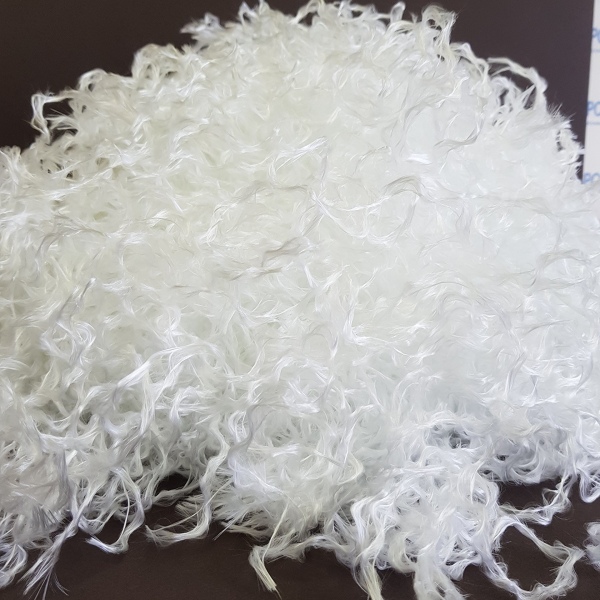
Fiberglas ist nach wie vor eines der am häufigsten verwendeten Materialien für Absorptionsschalldämpfer.
Es kombiniert eine geringe Schüttdichte mit einer großen Faseroberfläche und bietet so eine gute Schallabsorption ohne übermäßiges Gewicht.
Typische Formen sind:
loses Glasfasergarn
Endlosglasfaser,
texturierte Glasfaser,
Glasfasermatten,
Fiberglas-Packkissen,
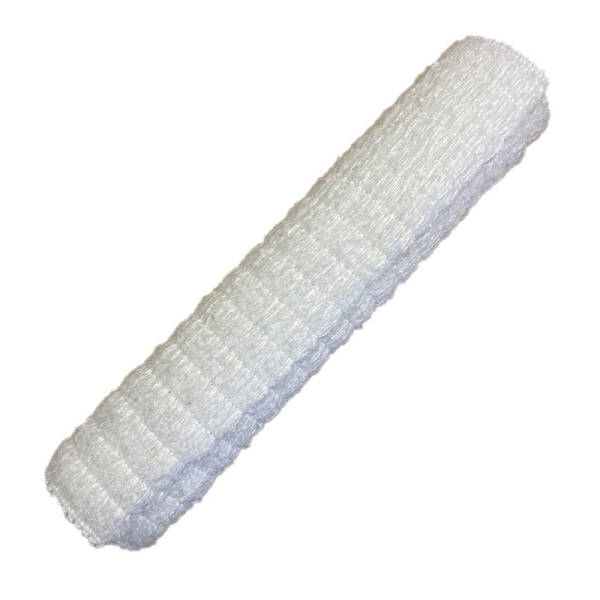
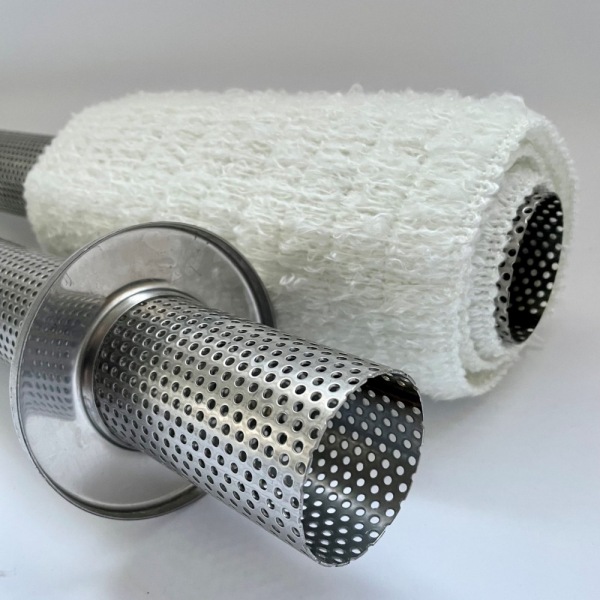
vorgeformte Verpackungssocken
und Glasfasern, die in gewebten Glasfasernetzsäcken enthalten sind.
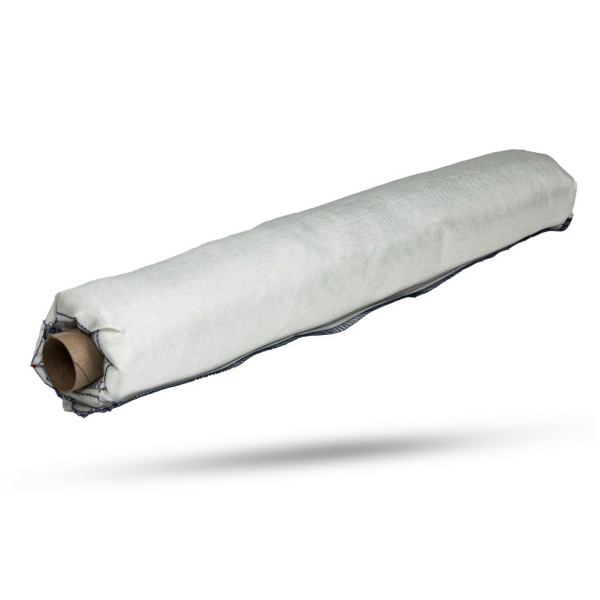
BSTFLEX stellt einen herGlasfaser-Schalldämpfer-Dichtungssack mit gewebtem Glasfasernetzbeutelfür Anwendungen, bei denen eine kontrollierte Installation und Faserfixierung einer losen Verpackung vorzuziehen sind.
Glasfaserpackungen werden häufig gewählt für:
Motorradschalldämpfer,
Schalldämpfer für ATVs und UTVs,
Hochleistungsabgasanlagen für Kraftfahrzeuge
Ersatzschalldämpfer,
Rennsportauspuffanlagen,
und viele OEM-Absorptionsschalldämpfer.
Sein Hauptvorteil liegt im ausgewogenen Verhältnis zwischen akustischer Effizienz, Gewicht, Herstellbarkeit und Kosten.
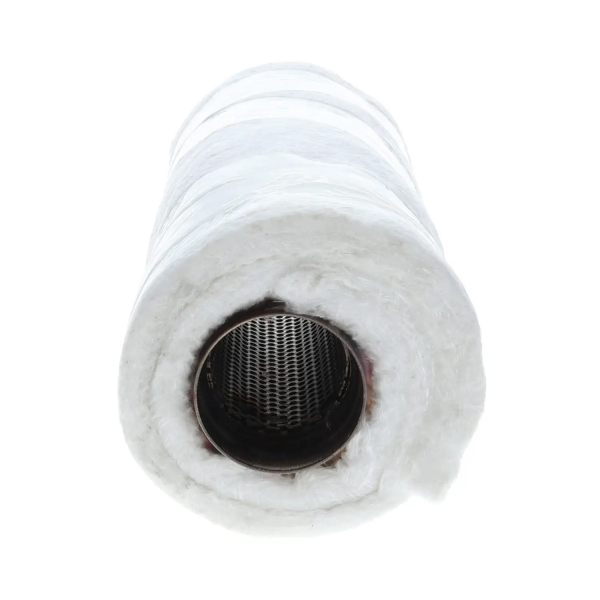
Edelstahlwolle erfüllt eine etwas andere Funktion.
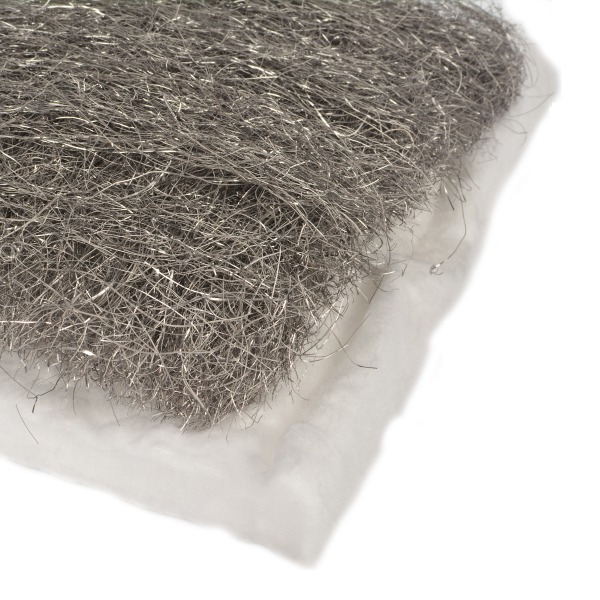
Es kann als Dichtungsmaterial verwendet werden, wird aber in vielen Hochleistungsabgasanlagen direkt um das perforierte Rohr als Schutzschicht angebracht.
Die typische Anordnung sieht folgendermaßen aus:
Perforierter Kern → Edelstahlwolle → Glasfaserwolle → Schalldämpfergehäuse
Die Edelstahlschicht trägt dazu bei, die weicheren Akustikfasern vor Folgendem zu schützen:
sehr heiße Abgase
Hochgeschwindigkeitsimpulse,
Turbulenzen um die Perforationen herum,
Flammenexposition
und fortschreitendem Faserbruch.
Diese Konstruktion ist besonders nützlich bei anspruchsvollen Abgasanlagen für Motorräder, Rennmotorräder, Turbomotoren und Hochleistungsabgasanlagen.
Aus diesem Grund ist der Vergleich von Glasfaser- und Edelstahlwolle, als ob nur ein einziges Material verwendet werden könnte, mitunter irreführend. In vielen Schalldämpfern erfüllen sie einander ergänzende Funktionen.
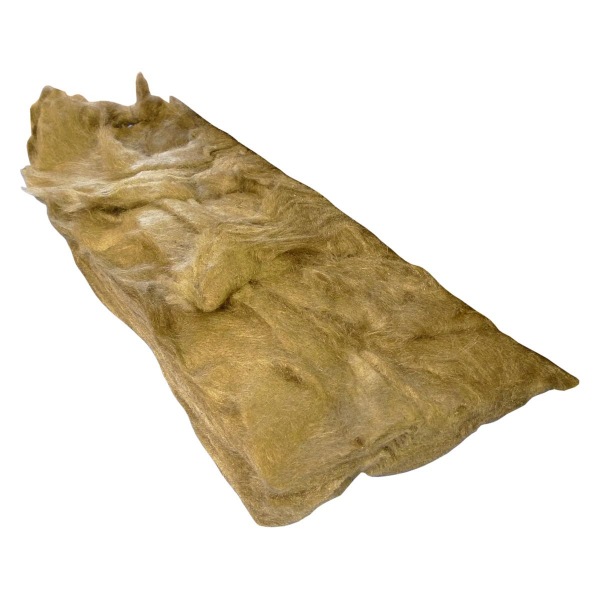
Bei besonders hohen Abgastemperaturen kann der Einsatz von Keramikfasern erwogen werden.
Schalldämpferpackungen aus Keramikfasern sind aufgrund ihrer Hochtemperaturbeständigkeit und relativ geringen Wärmeleitfähigkeit attraktiv.
Mögliche Anwendungsgebiete sind:
high-temperature industrial silencers,
heavy-duty engine exhaust systems,
certain generator exhaust assemblies,
thermal-intensive exhaust equipment,
and special mufflers operating beyond the practical range of conventional glass fiber.
However, the highest temperature material is not automatically the best acoustic material.
Density, fiber diameter, resilience, vibration resistance, handling requirements, and long-term fiber stability must also be evaluated.
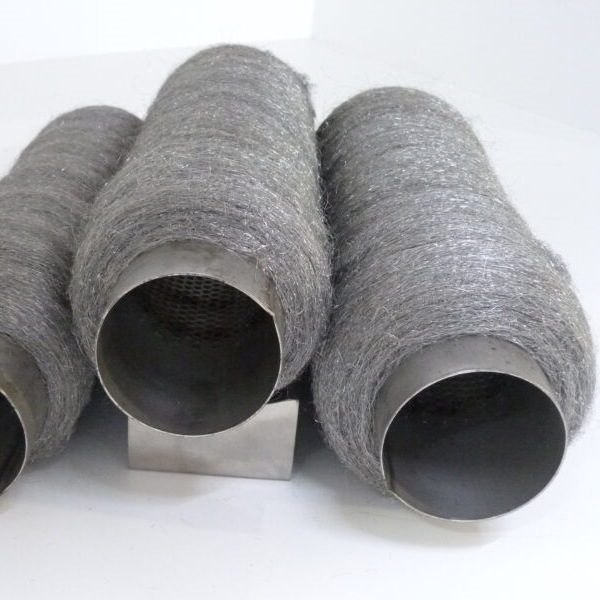
Basalt fiber provides another option between conventional glass fiber and more specialized high-temperature materials.
Produced from volcanic basalt rock, continuous basalt fibers can provide:
good thermal resistance,
mechanical stability,
chemical resistance,
vibration resistance,
and useful acoustic performance.
Basalt muffler packing can therefore be considered for automotive, motorcycle, heavy-duty, or industrial exhaust systems where designers want a mineral-fiber solution with elevated thermal capability.
| Packing Material | Primary Strength | Typical Position | Suitable Applications |
|---|---|---|---|
| Fiberglass | Efficient acoustic absorption | Main packing layer | Motorcycle, automotive, performance exhaust |
| Stainless Steel Wool | Heat and erosion protection | Around perforated core or as metallic packing | Racing, turbo, high gas velocity exhaust |
| Ceramic Fiber | Extreme-temperature capability | Main or supplementary insulation layer | Industrial and severe-temperature silencers |
| Basalt Fiber | Thermal and mechanical durability | Main acoustic packing layer | Heavy-duty, automotive and industrial exhaust |
The correct construction may combine two or more materials rather than using a single fiber throughout the silencer.
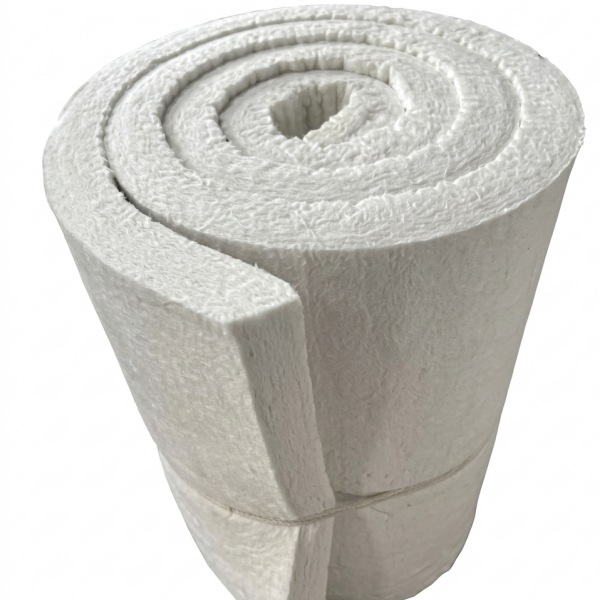
Two mufflers using exactly the same fiber can perform differently simply because the material was installed at different densities.
This is one of the most overlooked aspects of exhaust muffler packing.
If the fiber mass is insufficient, several problems can develop:
reduced acoustic absorption,
rapid fiber movement,
localized empty areas,
increased exhaust noise,
accelerated blowout.
The fibers may also redistribute under vibration and exhaust pulsation.
Over-compression creates another set of problems.
When fibrous material is compressed excessively, the void structure needed for acoustic energy dissipation changes.
The result can be:
poorer sound absorption in certain frequency ranges,
increased silencer weight,
difficult assembly,
reduced fiber resilience,
and unnecessary material consumption.
The goal is therefore not to put the maximum possible amount of packing inside the muffler.
The objective is to achieve a controlled and repeatable packing density suitable for the muffler geometry and target acoustic performance.
Muffler packing works in one of the harshest environments on a vehicle.
The material may experience thousands of heating and cooling cycles together with vibration and rapidly fluctuating exhaust pressure.
Several deterioration mechanisms can occur.
High-velocity exhaust gases passing through perforations gradually attack exposed fibers.
This is often called fiber blowout.
Continuous exposure to elevated temperature can reduce fiber resilience and alter the packing structure.
Vibration can cause loose packing to migrate or compact.
The silencer may develop areas with insufficient material even when the total amount of packing originally installed was correct.
Condensation, oil residue, incomplete combustion products, and other deposits can affect the condition of the acoustic fibers.
A theoretically suitable material may still fail prematurely if it is packed unevenly or installed at the wrong density.
Muffler packing deterioration is not always visible from outside the silencer.
Several operating changes can indicate that the material should be inspected.
Common signs include:
A noticeable increase in exhaust volume
The muffler gradually becomes louder because the effective acoustic mass has decreased.
A sharper or metallic exhaust note
When the packing layer becomes thin, sound energy interacts more directly with the metal shell.
Fibers coming from the tailpipe
Visible strands or particles at the outlet may indicate packing migration or blowout.
Hot spots on the muffler casing
Loss or movement of the internal packing can create uneven thermal distribution.
Rattling or internal movement
This can indicate loose material or deterioration of internal components.
Motorcycle silencers place especially high demands on packing material because the available volume is limited while exhaust temperatures and pulse velocity can be high.
For this reason, motorcycle exhaust packing normally needs to combine:
strong acoustic absorption,
low weight,
good thermal stability,
resistance to vibration,
easy repacking,
and controlled fiber retention.
Both two-stroke and four-stroke engines use packed silencers, but their operating environments differ considerably.
Two-stroke exhaust packing can be affected heavily by oil, combustion residue, and frequent repacking cycles.
Four-stroke performance exhausts may expose the material to higher sustained temperatures and aggressive exhaust pulses.
Selecting packing purely by motorcycle type is therefore insufficient. Muffler construction and engine operating conditions should also be considered.
Performance exhaust manufacturers often need to reduce sound without introducing excessive backpressure.
Straight-through absorption mufflers are useful in this situation because the exhaust path remains relatively open.
The acoustic packing surrounding the perforated core becomes a critical component.
Depending on the application, manufacturers may specify:
continuous fiberglass packing,
stainless steel wool core protection,
composite stainless/fiberglass systems,
basalt fiber,
or specialized high-temperature fibers.
For racing exhaust systems, packing retention becomes particularly important because high gas velocities can rapidly damage exposed loose fibers.
Industrial silencers operate under a different set of requirements.
Applications can include:
diesel generators,
gas engines,
compressors,
turbines,
exhaust treatment equipment,
heavy machinery,
power generation systems,
and industrial ventilation or acoustic control systems.
In these installations, designers may prioritize:
continuous operating temperature,
acoustic absorption over a specified frequency range,
long maintenance intervals,
fiber stability,
corrosion resistance,
and repeatable packing density.
Industrial buyers therefore often purchase muffler packing by engineering specification rather than simply selecting a consumer repacking kit.
Manufacturers normally have several ways to introduce fiber into a silencer.
Loose fibers or strands allow considerable flexibility during assembly.
They work well where the muffler geometry varies or packing is performed manually.
The challenge is maintaining consistent density from one muffler to another.
Mats provide more predictable thickness and make material handling easier during production.
They are especially suitable when the silencer has a regular cylindrical geometry.
A measured amount of fiber is enclosed inside a lightweight retaining fabric or mesh.
This allows manufacturers to control fiber mass before installation.
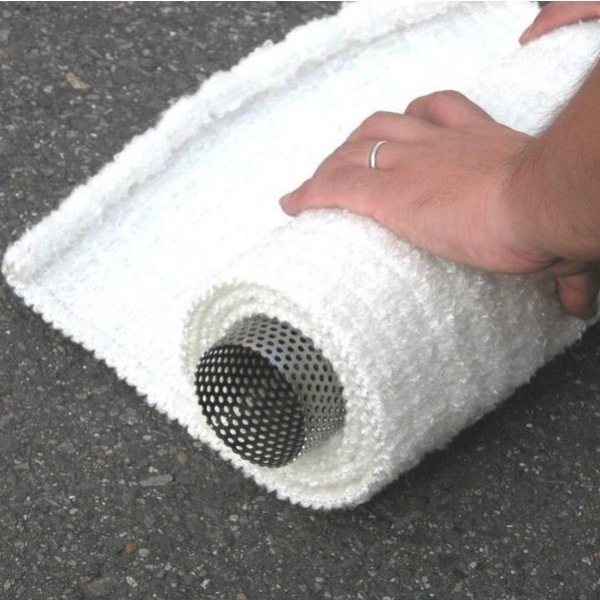
A tubular packing assembly can be fitted around the perforated core, reducing installation time and helping maintain circumferential coverage.
BSTFLEX develops customized packing formats including fiberglass-based assemblies for OEM exhaust production.
A purchase specification should contain more information than simply:
“Fiberglass muffler packing.”
For repeatable production, buyers should consider supplying:
| Specification Item | Why It Matters |
|---|---|
| Fiber material | Determines thermal and mechanical behavior |
| Silencer internal diameter | Defines available packing space |
| Perforated core diameter | Determines required packing thickness |
| Muffler length | Determines fiber quantity |
| Target packing density | Influences acoustic performance |
| Continuous exhaust temperature | Determines material suitability |
| Peak temperature | Identifies short-duration thermal exposure |
| Engine type | Helps evaluate exhaust environment |
| Packing format | Loose fiber, mat, pillow, sock or custom assembly |
| Annual quantity | Determines manufacturing and packaging method |
When these parameters are available, the packing can be engineered around the silencer rather than supplied as a generic bulk fiber.
Manual loose packing creates several variables.
One operator may install more material than another. Distribution around the perforated tube may also vary.
Preformed systems reduce this variability.
A packing sock, bag, pillow, or measured mat can provide:
defined material weight,
more uniform circumferential distribution,
reduced fiber handling,
shorter assembly time,
cleaner production,
improved batch repeatability.
For medium- and high-volume exhaust manufacturing, those manufacturing benefits can be as important as the thermal properties of the fiber itself.
A practical starting point is to identify the dominant failure risk.
Consider fiberglass as the primary acoustic layer.
Consider a stainless steel wool or metallic mesh protection layer before the main fiber packing.
Evaluate ceramic or other elevated-temperature fibers.
Consider materials and packing forms with stronger dimensional stability and controlled retention.
Consider preformed socks, pillows, mats, or custom packing assemblies rather than uncontrolled loose fill.
BSTFLEX manufactures high-temperature thermal and acoustic materials for exhaust systems and can support both replacement packing and OEM silencer production.
Available development options can include:
fiberglass muffler packing,
glass fiber silencer packing,
stainless steel wool packing,
ceramic fiber packing,
basalt-based packing,
loose fiber,
mats,
rolls,
packing bags,
packing pillows,
tubular packing socks,
and customized preformed assemblies.
Sizes, packing weight, fiber combination, retaining construction, and packaging can be developed according to customer drawings, samples, or silencer dimensions.
For applications requiring easier assembly and improved fiber containment, see theFiberglass Muffler Packing Sock with Woven Glass Mesh Bag.
For additional material options, visit theBSTFLEX Muffler Packing category.
There is no universal best material. Fiberglass is widely used because of its acoustic efficiency and weight, stainless steel wool is effective for protecting packing near the perforated core, while ceramic and basalt fibers may be selected where higher temperature capability is required.
Yes. Fiberglass is one of the most common acoustic materials used in absorption-type exhaust silencers because its fibrous structure provides efficient sound absorption while remaining relatively lightweight.
It can be used alone in some designs, but stainless steel wool and fiberglass often perform different functions. Stainless steel wool can protect the inner packing from exhaust erosion, while fiberglass provides the principal acoustic absorption layer.
Packing can escape because of fiber erosion, excessive gas velocity, damaged retaining mesh, incorrect packing density, thermal degradation, or deterioration around the perforated core.
Not necessarily. Excessive compression can reduce the open fiber structure needed for effective acoustic absorption. Packing density should be controlled rather than maximized.
There is no fixed interval for every exhaust system. Replacement frequency depends on exhaust temperature, engine type, riding conditions, packing material, gas velocity, silencer design, and operating hours.
Ja. OEM-Packungen können gemäß Kerndurchmesser, Gehäusedurchmesser, Schalldämpferlänge, Zielgewicht der Packung, Materialspezifikation, Temperaturanforderungen und bevorzugter Einbauform geliefert werden.
Bei der Abgasanlagenkonstruktion steht oft die sichtbare Schalldämpferhülle im Vordergrund, doch das Material, das sich zwischen dieser Hülle und dem perforierten Kern befindet, bestimmt einen wesentlichen Teil des akustischen Verhaltens des Schalldämpfers.
Ein korrekt konstruierterSchalldämpfer-Dichtungsmaterialsollte nicht nur Hitze überstehen.
Es muss das richtige Verhältnis zwischen Faserstruktur, Dichte, Schallabsorption, Erosionsbeständigkeit und Installationskonsistenz aufrechterhalten.
Für Standard-Schalldämpfer an Motorrädern und Autos ist Glasfaser nach wie vor eine der vielseitigsten Optionen. In anspruchsvollen Abgasumgebungen können Edelstahlwolle, Keramikfasern, Basaltfasern oder Mehrschichtkombinationen die Lebensdauer verlängern.
Für OEM-Auspuffhersteller besteht der nächste Schritt nicht einfach in der Auswahl einer Faser.
Es definiert das RichtigeAuspuffschalldämpfer-Dichtungssystemfür die Schalldämpfergeometrie, die Abgastemperatur, das akustische Ziel und das Herstellungsverfahren.
BSTFLEX fertigt und individualisiert Schalldämpfer-Dämmmaterialien für Motorrad-, Automobil-, Renn-, Generator-, Schiffs- und Industrieabgasanlagen.
Bitte kontaktieren Sie BSTFLEX mit Angabe Ihrer Schalldämpferabmessungen, der Betriebstemperatur, des benötigten Packungsformats und der jährlichen Produktionsmenge zur Materialauswahl und Musterentwicklung.

No.10, Chuangxin North Road, Nanshan Park, Ningguo Economic and Technological Development Zone, Ningguo City, Anhui Province, China
Tel/Whatsapp : 0086-15856303740
Email : sales@bstbraidedsleeve.com
Skype : vanesa-cheng